Pittsburgh & Allegheny County, Pennsylvania
Basement Waterproofing in Pittsburgh, Where Houses Are Built Into Hills
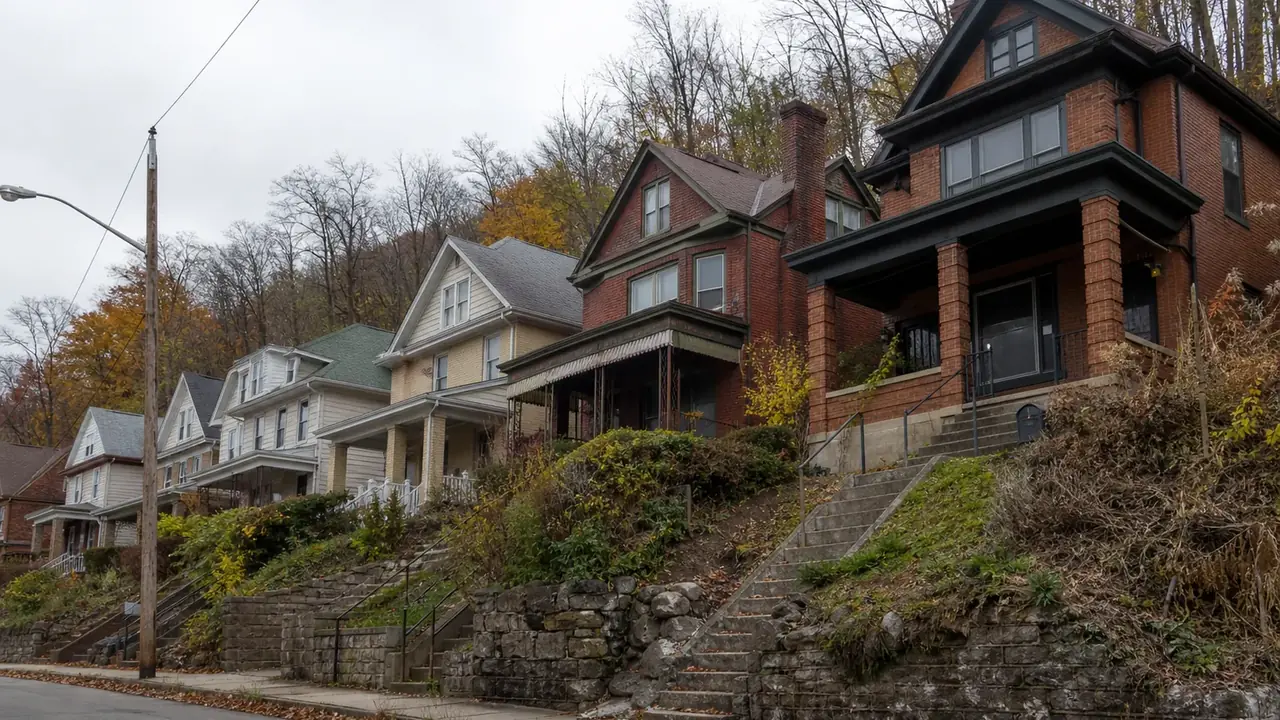
Basement waterproofing in Pittsburgh is shaped by the ground. Many houses sit on slopes, with one basement wall holding back a hillside, and most were built long before modern drainage was standard. The water usually arrives from uphill. Here is how to read where it comes from and what each fix costs.
Pittsburgh averages 41.3 inches of precipitation a year (NOAA), and 83% of its homes were built before 1980 (U.S. Census). HomeGuide (2026) puts interior basement waterproofing at $6,000–$12,000 and exterior work at $10,000–$18,000; a single crack injection runs $250–$800.
Why do Pittsburgh basements take on water?
Three things stack up. The weather: the city's airport station averages 41.3 inches of precipitation a year, with 89 days bringing a tenth of an inch or more (NOAA 1991–2020 Climate Normals). The housing: 83% of Pittsburgh's 161,908 homes were built before 1980 and only 10% since 2000 (U.S. Census ACS 2020–2024), so many basements have stone, brick or block walls without modern footing drains. And the slopes: on a hillside lot, rain and groundwater move downhill and meet the uphill basement wall first.
That is why so many Pittsburgh leaks show up along one wall, often low near the floor, after a soaking rain or a thaw.
Basement waterproofing in Pittsburgh: the main fixes
- Outside first. Gutters, downspout extensions and grading that sends water away from the uphill side. HomeGuide puts regrading at $1,000–$5,000.
- An interior drain and sump. A channel cut along the inside of the wall collects water and sends it to a pump. HomeGuide lists interior French drains at $4,000–$17,000 and sump installs at $600–$2,500.
- Exterior drain and membrane. Digging the uphill side, adding drain pipe and a membrane. More disruption on a steep, tight lot, but it stops water at the wall.
- Crack injection. For one leaking crack in a poured wall, $250–$800 per crack (HomeGuide).
The hillside wall leaks page walks through which fits which wall.
Three pages for a wet or moving basement
- Leaks through a hillside basement wallWhy the uphill wall leaks, stone versus block, interior drains, digging outside and when sealers fail.
- Foundation repair on Pittsburgh's slopesBowing walls, settling corners, the redbeds and hillside movement, repair methods and the engineer question.
- Sump pump installation in a Pittsburgh basementPit, pump, battery backup, discharge downhill, and replacing an old pump, with HomeGuide prices.
- Pittsburgh basement waterproofing cost guideInterior and exterior systems, sumps, cracks, grading and wall repair, each range credited to HomeGuide.
Start with the ground and the signs
- Hills, redbeds and wet basements in PittsburghWhy the ground matters: rain, slopes, red mudstone, landslide maps and what to watch on your lot.
- What that basement sign usually meansWater at the floor joint, white crust, sand from stone walls, horizontal cracks, a sump that never stops.
When the wall is moving, not just wet
Water pressure and saturated clay can push a block wall inward. A horizontal crack, a wall leaning in at mid-height or stair-step cracks in block are signs of movement rather than seepage, and they call for foundation repair, ideally after an engineer has looked. On some hillsides the ground itself moves: Pennsylvania's Bureau of Geological Survey says southwestern Pennsylvania has by far the highest concentration of landslides in the state, and the U.S. Geological Survey ties most of Allegheny County's slope problems to the red mudstone called the Pittsburgh redbeds.
Pennsylvania rules that protect you
Pennsylvania's Home Improvement Consumer Protection Act requires contractors who do $5,000 or more of home improvement work a year to register with the Attorney General, and any home improvement contract over $500 must be in writing, signed by both sides, with a description of the work, approximate start and finish dates, the total price and notice of your right to cancel. On projects over $5,000, deposits are generally limited to one-third of the price plus special-order materials. In the City of Pittsburgh, residential alteration permits for owner-occupied homes go to contractors with that state registration (Pittsburgh Permits, Licenses and Inspections).
Where your request goes
Pittsburgh Basement Fix is an independent local resource. It explains the weather, the ground and the published prices; it does not dig, drain or repair anything. A request sent through the form goes to one independent basement and foundation specialist who works in Pittsburgh, who pays this site for it and then gets in touch. Ask them for their Attorney General registration number and a written, itemized proposal before any work begins.
Questions homeowners ask
Why does my Pittsburgh basement leak only along one wall?
On a hillside lot, the uphill wall holds back the most soil and meets rain and groundwater first. Water moving downslope saturates the ground against that wall, then finds the joint at the floor, a mortar seam or a crack. Fixing drainage on that side, inside or out, usually matters more than treating the whole basement.
Do basement waterproofing contractors need a license in Pennsylvania?
Pennsylvania has no separate waterproofing license, but contractors who do $5,000 or more of home improvement work a year must register with the Attorney General under the Home Improvement Consumer Protection Act. Ask for the registration number, which must appear on your written contract, and check it with the Attorney General's office.
Is waterproofing worth it on an old stone foundation?
Often, yes, but the approach differs. Old stone and brick walls breathe and seep through mortar joints rather than single cracks, so interior drainage with a sump, plus better outside grading, usually does more than sealers. Ask the specialist to explain how their system handles water coming through the whole wall face.
Sources
- NOAA NCEI U.S. Climate Normals 1991-2020: Pittsburgh Allegheny County Airport
- U.S. Census Bureau, ACS 2020-2024: year structure built, Pittsburgh city
- Pennsylvania DCNR, Bureau of Geological Survey: Landslides
- Pennsylvania Office of Attorney General: Home Improvement Contractor Registration
- City of Pittsburgh PLI: Permit Issuance and trade license requirements
Where is the water getting in?
A sentence or two helps: water along the uphill wall after rain, a stone wall shedding sand, a sump that runs all spring, a crack that has grown. One independent basement specialist who works in Pittsburgh will get in touch.